Kilim Motifs and Their Meanings
Since the dawn of its existence, humanity has
felt the need to express its emotions, way of life,
values, ideas, daily routines, history, and dreams.
People of every region and every era have
channeled this need into their art, utilizing whatever
resources were at their disposal.
For the people of Anatolia, the
canvas—stretching from the era of Çatalhöyük right up
to the present day—is the kilim; and the stories they
tell lie hidden within the motifs woven into these
textiles.
Here are some common carpet and kilim motifs
and their meanings:

Kilim Motifleri ve Anlamları
İnsanoğlu, varoluşundan bu yana duygularını,
yaşamını, değerlerini, fikirlerini, gündelik hayatını,
geçmişini ve hayallerini anlatma ihtiyacı duyar.
Bunu her yörenin, her dönemin insanı,
elindeki kaynakları kullanarak sanatına aktarır.
Anadolu insanının tuvali, Çatalhöyük’ten bu
zamana dek gelen kilimlerdir ve anlattıkları, bu
kilimlere dokunan motiflerde gizlidir.
İşte bazı halı kilim motifleri ve anlamları:
The Scorpion Motif
Among the motifs crafted specifically for the
purpose of protection, the scorpion-shaped kilim motif
symbolizes the malevolent spirit.
This scorpion is perpetually lying in ambush,
poised to strike and kill.
It represents gratuitous conflict and ill
intent.
The people of Anatolia—who, as a general
practice, incorporate a likeness or pattern of
whatever they fear into their art as a means of
warding it off—employ the scorpion motif in their
carpets and kilims to protect themselves against
harmful creatures.

Akrep Motifi
Korunma amacıyla işlenen motiflerden olan
akrep biçimindeki kilim motifleri, şeytanî ruhu
sembolize ederler.
Bu akrep, daima öldürmek için pusuda bekler.
Sebepsiz kavga ve kötü niyeti temsil eder.
Korktuğu her ne ise bir parçası ya da
desenini, ondan sakınmak adına kullanan Anadolu
insanı, zarar verici mahlukatlardan sakınmak için de
halı ve kilimlerde akrep motifini kullanır.
The Plus Motif and the Hook Motif
The plus sign and the hook are motifs
frequently encountered in Turkish carpet designs.
The plus motif bears no relation to the
Christian symbol of the cross.
It is known to be utilized as a talisman for
protection against misfortune and danger.
Artı Motifi ve Çengel Motifi
Artı ile çengel, Türk halı motifleri arasında
sıkça karşılaşılan motiflerdir.
Artı motifinin, Hristiyanlığın haç simgesi
ile ilgisi yoktur.
Bela ve tehlikelerden korunmak için
kullanıldığı bilinir.
The Fertility Motif
The kilim patterns collectively known as
"fertility motifs" can be categorized into three
distinct groups.
The first group comprises fruits—such as
pomegranates, grapes, melons, watermelons, figs, and
mulberries—as well as animals like dragons, bulls,
snakes, rams, butterflies, deer, and fish; these
elements symbolize boundless happiness.
The second group consists of leaf, flower,
and tree motifs, which represent abundance and good
fortune.
The third group, meanwhile...
Natural elements such as water, rocks, and
mountains are featured, representing the universe—its
motion and structure—as well as the cycles of birth,
death, and rebirth.

Bereket Motifi
Bereket motifi olarak bilinen kilim
desenleri, üç grupta değerlendirilebilir.
İlk grupta; nar, üzüm, kavun, karpuz, incir,
dut gibi meyveler ile ejder, boğa, yılan, koç,
kelebek, geyik, balık gibi hayvanlar yer alır ve uçsuz
bucaksız mutluluğu sembolize ederler.
İkinci grupta; yapraklar, çiçekler ve ağaç
motifleri yer alır ve bolluğu, uğuru simgelerler.
Üçüncü grupta ise; sular, kayalar, dağlar
gibi tabiat varlıkları yer alır ve evreni, onun
hareketini, yapısını aynı zamanda doğum, ölüm ve
yeniden doğumu temsil ederler.
The Hobble Motif
A *bukağı* (hobble) is the name given to the
chain fastened around a horse's two front legs to
prevent it from straying too far from the pasture.
Inspired by this chain, kilim patterns
featuring this motif symbolize love, unity, and the
stability of the family.
The tradition of tying engagement rings
together with a red ribbon also derives from this
hobble symbol.

Bukağı Motifi
Bukağı, atın iki ön ayağına, otlağın uzağına
gitmesin diye takılan zincirin ismidir.
Bu zincirden ilham alan kilim desenleri ve
anlamları, aşkı, birliği ve ailenin istikrarını
simgeler.
Nişanlanırken yüzükleri kırmızı kurdele ile
birbirine bağlama geleneği de bukağı sembolünden
gelir.
The Dragon Motif
The dragon is a symbolic creature—a giant,
serpent-like being with wings, claws reminiscent of a
lion's, and a tail resembling a snake's.
It is regarded as the master of water and
air, as well as the guardian of hidden treasures.
It is woven into carpets and kilims with the
specific intention of invoking the arrival of the
fertile spring rains.

Ejderha/Ejder Motifi
Ejderha, pençeleri aslanı hatırlatan, kuyruğu
bir yılana benzeyen, kanatları olan dev bir tür yılan
sembolüdür.
Su ile havanın efendisi ve gizli hazinelerin
bekçisidir.
Bereketli bahar yağmuruna kavuşma niyeti ile
halı ve kilimlere dokunur.
The "Hands-on-Hips" Motif
The widely utilized "hands-on-hips" (*eli
belinde*) motif represents femininity, fertility, good
fortune, joy, auspiciousness, happiness, and
abundance.
It is known that early humans, believing
procreation to be a process belonging exclusively to
females—and being unaware of the male's contribution
to reproduction—regarded mother goddesses as sacred
and worshipped them.
The origins of this motif, which continues to
be employed in contemporary carpet weaving, lie in
this ancient belief regarding mother goddesses.

Eli Belinde Motifi
Yaygın olarak kullanılan eli belinde motifi,
dişiliği, doğurganlığı, kısmeti, neşeyi, uğuru,
mutluluğu ve bereketi temsil eder.
İlk insanların, üremeyi yalnızca dişilere ait
bir süreç sanması ve erkeğin üremeye katkısını
bilmemesi sebebiyle, ana tanrıçaları kutsal görüp
taptıkları bilinir.
Günümüzde halı dokumalarında kullanılmaya
devam eden bu motifin kökeni, ana tanrıçalarla ilgili
bu inanca dayanır.
The Eye Motif
Woven as a safeguard against the "evil eye,"
eye-shaped kilim patterns are typically crafted using
the color blue, which naturally draws and captures
attention.
In kilims, this motif is frequently
incorporated within or positioned around other
designs, such as the "hands-on-hips," "ram's horn,"
and "fertility" motifs.
Beyond its use as a means of protection
against the "evil eye," it also serves as a symbol of
intellectual insight, profound perception, and
spiritual enlightenment—much like the "eye of the
heart" or the "third eye" situated on the forehead of
Shiva, one of the deities of Buddhism.

Göz Motifi
Nazara karşı bir tedbir olarak nakşedilen göz
biçimindeki kilim desenleri, genellikle dikkatleri
üstünde toplayan mavi renk ile dokunur.
Kilim lerde, eli belinde, koçboynuzu ve
bereket motifinin içinde ya da çevresinde sıkça
kullanılır.
Kötü gözlerden korunma amacıyla
kullanılmasının yanı sıra, “gönül gözü” tabir edilen
göz ve Budizm Tanrılarından Şiva’nın alnında yer alan
“üçüncü göz” gibi, entelektüel bakışın, derin algının
ve ruhani aydınlığın da simgesidir
The Tree of Life Motif
True to its name, the Tree of Life motif
symbolizes the universe itself—an entity that sustains
its existence through constant growth and
transformation.
Its roots, anchored in the soil, represent
deep-seatedness, eternity, and permanence.
Extending upward through its lower branches
and trunk toward the sky—and reaching even further
through its upper branches toward paradise—it serves
to bridge the celestial realm with the earthly one.
Various trees—such as the pomegranate, date
palm, olive, fig, cypress, beech, cedar, oak, palm,
and grapevine—are frequently employed to symbolize the
Tree of Life.
The birds depicted perched upon these trees,
in turn, symbolize the "soul-birds"—the spirits that
depart when their appointed time has come.

Hayat Ağacı Motifi
İsmi ile müsemma hayat ağacı motifi, devamlı
halde gelişerek ve değişerek yaşamayı sürdüren kâinatı
simgeler.
Toprağa bağlanan kökleri, kök salma, ebedilik
ve yerleşikliği temsil eder.
Alt dallar ve gövde ile gökyüzüne, üst dallar
ile cennete uzanır ve cennet ile yeryüzünü
birleştirir.
Nar, hurma, zeytin, incir, servi, kayın,
sedir, meşe, palmiye ve asma gibi ağaçlar, hayat
ağacını sembolize eder.
Bu ağaçların üstündeki kuşlar ise, vakti
gelince giden can kuşlarını simgeler.
Marks and Brand Motifs
Throughout history, it is well known that the
Turkic peoples utilized specific figures, marks, and
brands to signify various social and political
entities—such as tribes, clans, states, and
communities.
These brands and marks serve to represent the
very existence and identity of a specific community or
individual.
The primary objective behind this practice
was not only to ensure the continuity of a family's
name and lineage but also to safeguard the family's
valuable possessions.
Each woven textile, through its imagery,
conveys to future generations the tools, objects, and
cultural ethos prevalent within that society during
the era in which it was created.
Modern-day logos, emblems, and pictograms can
be seen as contemporary extensions of this enduring
tradition.

İm ve Damga Motifleri
Tarih süresince Türklerin boy, oba, devlet,
oymak gibi mefhumları anlatmak amacıyla belli başlı
figürler, imler, damgalar kullandıkları bilinir.
Bu damgalar ve imler, toplumun ya da kişinin
varoluşunu temsil eder.
Bunun amacı, aile isminin ve soyun devam
ettirilmesinin yanında, ailenin değerli eşyalarının da
korunmasıdır.
Her bir dokuma, döneminde kullanılan
araçları, eşyaları ve o toplum kültürünü yeni
nesillere aktarır.
Günümüzün logo, rumuz ve piktogramları da bu
gelenekle ilişkilidir.
The Human Motif
When the inherent meanings of Kilim motifs
converge with the personal emotions of the weaver, the
resulting imagery serves to narrate the specific
circumstances or state of mind of that moment.
Motifs featuring human figures, in
particular, frequently serve as expressions of
longing.
In some woven pieces, this motif symbolizes a
beloved who is far away—perhaps living in a distant
land—and whom the weaver yearns to see; in other
instances, it may symbolize a child, representing
either a daughter or a son.
It conveys the weaver's longing or their
anticipation of a child.
Furthermore, it serves as a symbol of
creativity and diligence.

İnsan Motifi
Kilim motifleri anlamları ile dokuyanın
duyguları birleştiğinde, içinde bulunulan durumu
anlatır.
İnsan deseni kullanılan motifler de, çoğu
zaman özleme işaret eder.
Bazı dokumalarda gurbette olan ve görmek
istenen sevgili, bazılarında ise kız ya da erkek
çocuğunu sembolize eden bir motiftir.
Dokuyan kişinin hasretini ya da çocuk
beklentisi duymasını anlatır.
Bunun yanında, yaratıcılık ve çalışkanlığın
da simgesidir.
The Eagle Motif
Occupying a significant place in the history
of the Turks, the eagle is regarded as a symbol of the
sky, a harbinger of the future, and a sacred messenger
responsible for guiding souls to the afterlife.
Carpet motifs featuring the eagle—known
collectively as the Eagle Motif—represent agility and
strength.

Kartal Motifi
Türklerin tarihinde kendine önemli bir yer
edinen kartal, gökyüzünün sembolü, geleceğin habercisi
ve öteki dünyaya ruhları götüren kutsal bir görevli
olarak görülür.
Kartal motifi olarak bilinen halı motifleri,
çevikliği ve kuvveti temsil eder.
The Ram's Horn Motif
Weavers symbolize the image of a ram—depicted
from above, the side, or the front using shapes such
as crescents or spirals—through this motif, referring
to it by names such as "ram-adorned design," "ram's
head," "eyed ram," or "horned design." they designate
them with these terms.
The ram's horn motif symbolizes masculinity,
strength, and heroism.

Koç Boynuzu Motifi
Dokumacılar, tepeden, yandan ve önden, hilal
ya da spiral gibi şekillerle koç görüntüsünü
sembolleştiren bu motifi, “koçlu yanış”, “koçbaşı”,
“gözlü koç” ya da “boynuzlu yanış” gibi tabirlerle
adlandırırlar.
Koç boynuzu motifi erkekliği, kuvveti ve
kahramanlığı sembolize eder.
Wolf's Mouth, Wolf's Paw Print, Monster's
Foot
The people of Anatolia sought to contend with
wolves—creatures revered by the Hittites as companions
to the gods—and to protect their herds from them.
By crossbreeding dogs and wolves, they
developed the Kangal—a breed they dubbed "the
monster"—and kept these animals constantly by their
side for protection.
This motif—frequently employed in kilims,
particularly within the border zones surrounding the
*mihrab* (prayer niche) section of prayer
rugs—represents optimism and protection.

Kurt Ağzı, Kurt İzi, Canavar Ayağı
Anadolu insanı, Hititlerde tanrı yoldaşı
olarak anılan kurtlarla baş etmek, sürülerini onlardan
korumak ister.
Köpek ve kurdu çiftleştirerek “canavar”
ismini verdikleri kangalı elde ederler ve onları
korunmak için hep yanlarında tutarlar.
Özellikle kilim seccadelerin mihrap bölümünün
çevresinde bulunan bordür ile zemin arasında sıkça
kullanılan motif de, iyimserlik ve korunmayı temsil
eder.
Bird Motif
In Anatolia, the bird symbol permeates almost
every aspect of life.
The bird's wing, feather, eye, beak, talon,
and even its bone have long been utilized for various
purposes.
Bird motifs, in turn, serve to symbolize—at
different times—the soul of the deceased, or
alternatively, a beloved, love itself, or womanhood.

Kuş Motifi
Anadolu’da kuş sembolü hayatın hemen her
alanına yayılmıştır.
Kuşun kanadı, tüyü, gözü, gagası, pençesi ve
hatta kemiği, farklı vesilelerle kullanılagelir.
Kuş motifleri ise, bazen ölen birinin ruhunu,
bazen ise sevgiliyi, aşkı ve kadını simgeler.
Earring Motif
Frequently woven by young, unmarried women,
the earring motif serves as a means for the weaver to
indirectly signal to her family her desire to marry.
It symbolizes the establishment of a home by
young men and women, as well as sexuality.
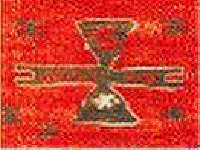
Küpe Motifi
Sıklıkla genç ve bekâr kızlar tarafından
işlenen küpe motifi, kilimi dokuyanın, evlenmeye dair
istekli olduğunu, dolaylı olarak ailesine anlatma
yoludur.
Genç erkeklerin ve kızların yuva kurmasını ve
cinselliği temsil eder.
Talisman (Amulet) Motif
Woven as a safeguard against the "evil eye,"
the talisman motif resembles a triangular eye.
It is crafted with the specific intention of
using one eye to ward off the envious gaze of another.

Muska Motif
Kem gözlerden sakınmak için dokunan muska
motifi, üçgen biçiminde bir göze benzer.
Kıskanç gözlerden, yine bir gözle korunmak
niyeti ile dokunur.
Burdock Motif
The people of Anatolia believe that the
burdock—a thorny field plant—uses its spines to repel
the evil eye; consequently, they weave the burdock
motif into their kilims for this very purpose.

Pıtrak Motifi
Anadolu insanı, dikenli tarla bitkilerinden
olan pıtrağın, dikenleri ile kem gözleri uzak
kıldığına inanır ve pıtrak bu maksatla kilimlere
dokur.
Hair Tie Motif
In the hair tie motif, the hair itself
symbolizes immortality.
Through this design, the weaver indirectly
expresses her desire to marry, to procreate, and to
remain united with her beloved until death.

Saç Bağı Motifi
Saç bağı motifinde saç, ölümsüz olmayı
simgeler.
Dokuyan, dolaylı olarak evlenmeyi, çoğalmayı
ve ölünceye dek sevdiğiyle olmayı istediğini anlatır.
The Chest Motif
Representing the chests in which young people
of marriageable age store their dowries, these Turkish
kilim motifs serve as a means for the weaver to convey
that her dowry is complete and ready.

Sandık Motifi
Evlilik çağına gelmiş gençlerin çeyizlerini
koyduğu sandıkları temsil eden Türk kilim motifleri,
dokuyanın, çeyizinin hazır olduğunu anlatma yoludur.
The Waterway Motif
Water is one of the most precious elements of
life.
Consequently, the kilim motifs adorned by the
people of Anatolia with the "Waterway" pattern—along
with their associated meanings—embody life, vitality,
abundance, purity, renewal, and rebirth.
Furthermore, they symbolize virtue, wisdom,
and nobility.

Suyolu Motifi
Su, hayatın en değerli parçalarından biridir.
Hal böyleyken, Anadolu insanının Suyolu
deseni ile bezediği kilim motifleri ve anlamları da,
hayatı, canlılığı, bolluğu, saflığı, yenilenme ve
yeniden doğmayı barındırır.
Bunların yanı sıra, erdemli, bilge ve soylu
olmayı da simgeler.
Comb, Finger, and Hand Motifs
Motifs resembling combs, fingers, or hands
are geometric patterns typically woven in groupings of
seven, five, or three.
Fundamentally, they consist of slender
extensions branching outward from a central stem.
The hands are the part of the human form that
represents creative power.
The people of Anatolia employ the hand motif
in various ways: sometimes in a realistic style, and
at other times using a symbolic idiom that utilizes
lines and dots.

Tarak, Parmak ve El Motifleri
Tarağa, parmaklara ya da ele benzer motifler,
yedili, beşli ve üçlü sayılarda dokunan geometrik
motiflerdir.
Temelde bir gövdeden çıkan çubuklardan
meydana gelir.
Eller, insanın yaratıcı gücünü temsil eden
parçasıdır.
Anadolu insanı, el motifini, bazen gerçekçi,
bazen ise çubuk ve noktalardan yararlanan sembolik bir
üslup benimseyerek kullanır.
The Snake Motif
Appearing in woven textiles in the form of
zigzags, dragons, or clouds, the snake motif
symbolizes power and immortality.
In Anatolia, the snake is regarded as a
sacred creature—one that is simultaneously feared and
revered.
When depicted with two heads, the snake is
recognized as a symbol of the healing arts,
representing the duality and coexistence of poison and
its antidote.

Yılan Motifi
Dokumalarda zikzak, ejder ya da bulut
biçiminde yer alan yılan motifi, gücü ve ölümsüzlüğü
simgeler.
Anadolu’da, kutsal görülen yılandan, hem
korkulur hem de saygı duyulur.
Çift başlı resmedilen yılan ise hekimlik
simgesi olarak bilinir ve zehir ile panzehrin
beraberliğini temsil eder.
The Star Motif
As a symbol of diligence and productivity,
the significance of star-shaped kilim motifs lies in
the weaver's desire to express that both she herself
and her family are hardworking and industrious.

Yıldız Motifi
Çalışkanlığın ve üretkenliğin temsilcisi olan
yıldız biçimindeki kilim motiflerinin anlamları,
dokuyanın, ailesi ve kendisinin çalışkan, gayretli
olduğunu ifade etmek istemesinde saklıdır.